 Skip to content
What Dance Competitions Teach Kids: Confidence, Discipline & Stage Presence at Zabava
Parents often see the finished routine: costumes, lights, music, judges, and a few minutes on stage. However, the benefits of dance competitions for kids in Boca Raton begin long before performance day. Through structured preparation, young dancers learn to manage nerves, apply corrections, support teammates, and perform with focus.
At Zabava Performing Arts School, competition is optional. Recreational students can enjoy dance without competing, while dancers who want a more demanding performance path can ask about competitive dance classes in Boca Raton and appropriate placement.
Dance competition training for kids can build confidence, discipline, teamwork, coachability, resilience, and stage presence. The real value comes from the work dancers put in during class with guidance that matches their age and experience.
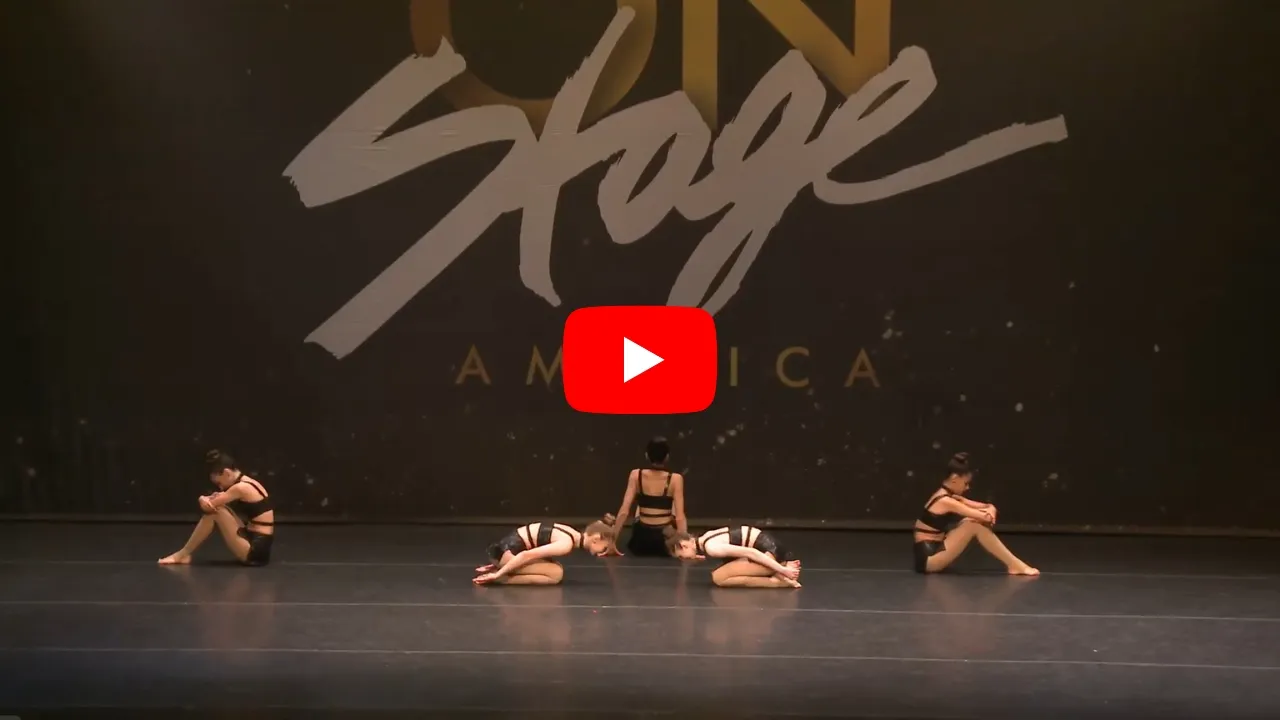
Watch the “JustAGirl” Small-Group Competition Performance
The Benefits of Dance Competitions Begin Before Performance Day
A dance competition gives children a defined project and a clear deadline. Dancers must learn choreography, improve technique, rehearse spacing, prepare costumes, and practice the details required for a stage-ready performance.
Progress becomes visible throughout that process. A dancer who initially forgets transitions, loses focus after a mistake, or feels uncomfortable performing may gradually learn to stay present, recover quickly, and complete the routine with greater control. Scores provide one form of feedback, but personal improvement is often the more useful measure of progress.
1. Confidence Built Through Preparation
Real confidence is the belief that preparation gives children something dependable to rely on. A dancer who has attended class, practiced corrections, and repeated difficult sections knows what to do when the music starts.
Competition training creates many small confidence-building moments. Students perform choreography in front of teachers and classmates. They practice entering and exiting the floor. They learn where to look, how to hold the final pose, and how to keep performing after a minor mistake. Each successful repetition reduces uncertainty.
On stage, dancers must use these skills while managing their nerves. Confidence means knowing how to continue when a step feels imperfect or something unexpected happens.
After the performance, a dancer can identify concrete progress: finishing the routine, remembering a correction, or recovering after losing balance. Confidence based on real experience is often more durable than confidence based on praise alone.
2. Discipline That Becomes a Habit
Competitive dance requires consistency because choreography depends on memory, timing, strength, and repetition. Missing class affects both the individual dancer and, in a group routine, everyone sharing the stage. Students begin to understand that commitment means showing up prepared, not simply feeling excited on performance day.
Discipline appears in practical behaviors: arriving on time, bringing the correct shoes, listening to corrections, repeating difficult sections without rushing, and practicing details that may not feel glamorous. Clean turns, controlled landings, and synchronized formations usually come from many focused attempts.
Dancers also experience delayed gratification. Flexibility, musicality, technique, and stamina develop over time. Competition preparation helps children see how organized, consistent effort can lead to measurable improvement.
3. Building Stage Presence for Young Dancers
Stage presence is sometimes mistaken for an outgoing personality. For young dancers, however, stage presence is a combination of trainable skills. A quiet child can become a strong performer, while an expressive child still needs control, musical timing, and awareness.
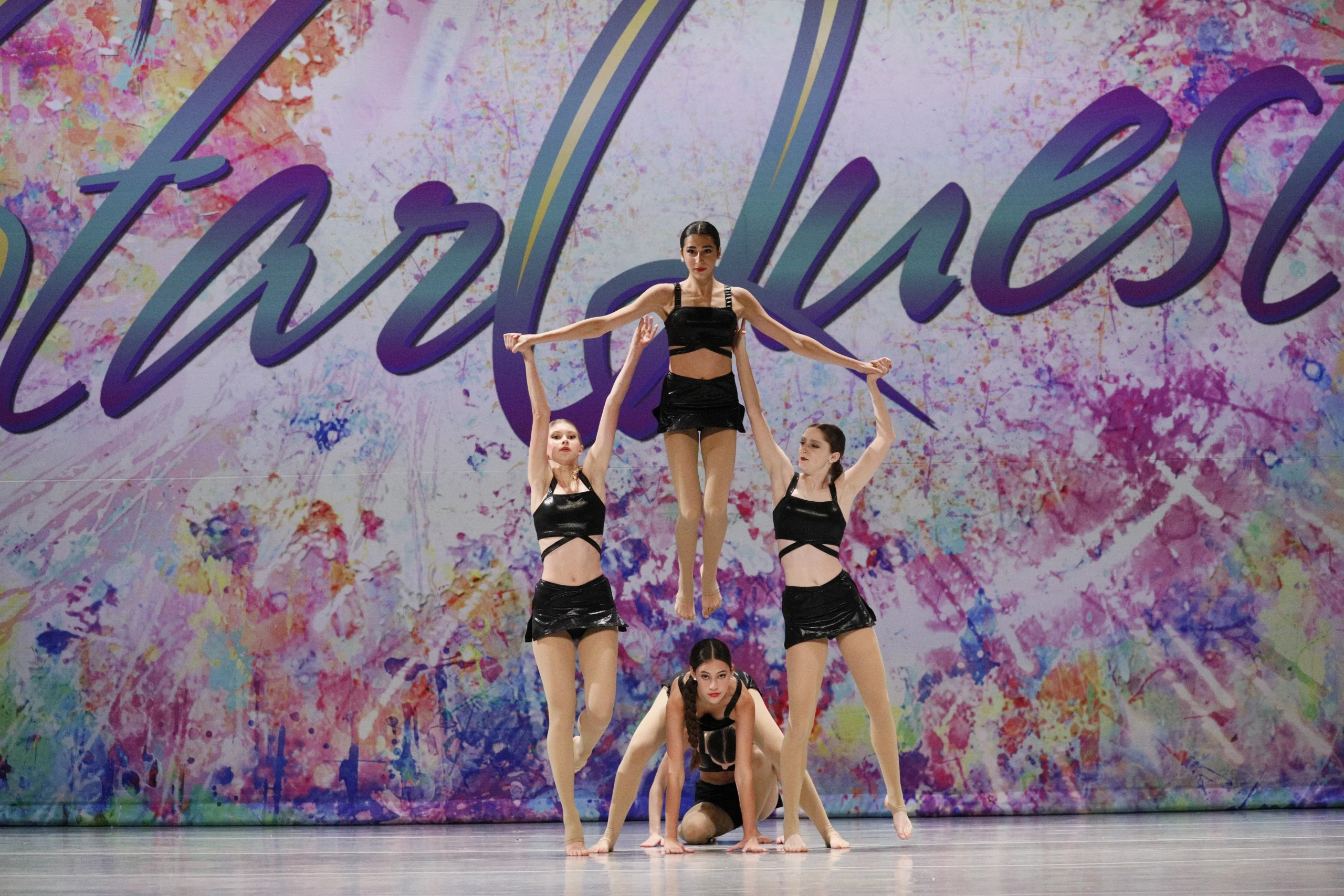
Young dancers learn to project movement so it reads beyond the front row. They practice clear focus, purposeful facial expression, complete lines, musical accents, and confident transitions. They also learn that the performance continues between major steps and technical elements. Walking into position, changing formations, and holding still can affect the audience’s experience as much as a leap or turn.
Competition gives dancers a chance to apply these skills in an unfamiliar setting, with stage lighting, judges, and a new audience. They must adapt to the stage size and stay connected to the music. If something unexpected happens, stage presence includes recovering without showing panic.
Solo and group routines develop this skill differently. A soloist carries the full performance and must sustain attention independently. A group dancer must project individual energy while matching the team’s timing, spacing, and tone. Both experiences teach students how to communicate without speaking.
4. Teamwork and Accountability in Group Routines
Group competition routines make responsibility visible. Every dancer affects formations, timing, spacing, and overall energy. No single dancer can create synchronization on their own, and even a strong performer cannot compensate for a team that has not learned to work together.
Students learn to watch one another without becoming distracted. They adjust spacing, match movement quality, and understand how their position connects to the complete stage picture. They also learn trust. In partnering, transitions, and close formations, dancers must know that teammates will be where they are supposed to be.
Zabava’s “JustAGirl” small group performance is a useful example of this shared responsibility. The routine’s impact depends on more than individual technique. The dancers must commit to the same timing, intention, and performance quality from the opening count through the final pose.
You can also read about Zabava’s 2026 competition season and the students’ recent competition achievements.
5. Coachability and a Better Response to Feedback
Competition preparation includes frequent corrections. Teachers may address posture, alignment, timing, expression, spacing, or the way a dancer enters a movement. Students learn that a correction is information, not a personal attack.
Coachability develops when a child can hear a correction, try the change, and notice whether it improves the routine. Over time, dancers begin asking more specific questions: Was my supporting leg straight? Did I finish the arm line? Was I early on the musical accent?
Judges’ comments provide another perspective, but teachers help students interpret that feedback. Not every comment needs to be applied immediately. The goal is to identify useful priorities and make changes that are appropriate and safe for the dancer.
6. Goal Setting, Resilience, and Handling Results
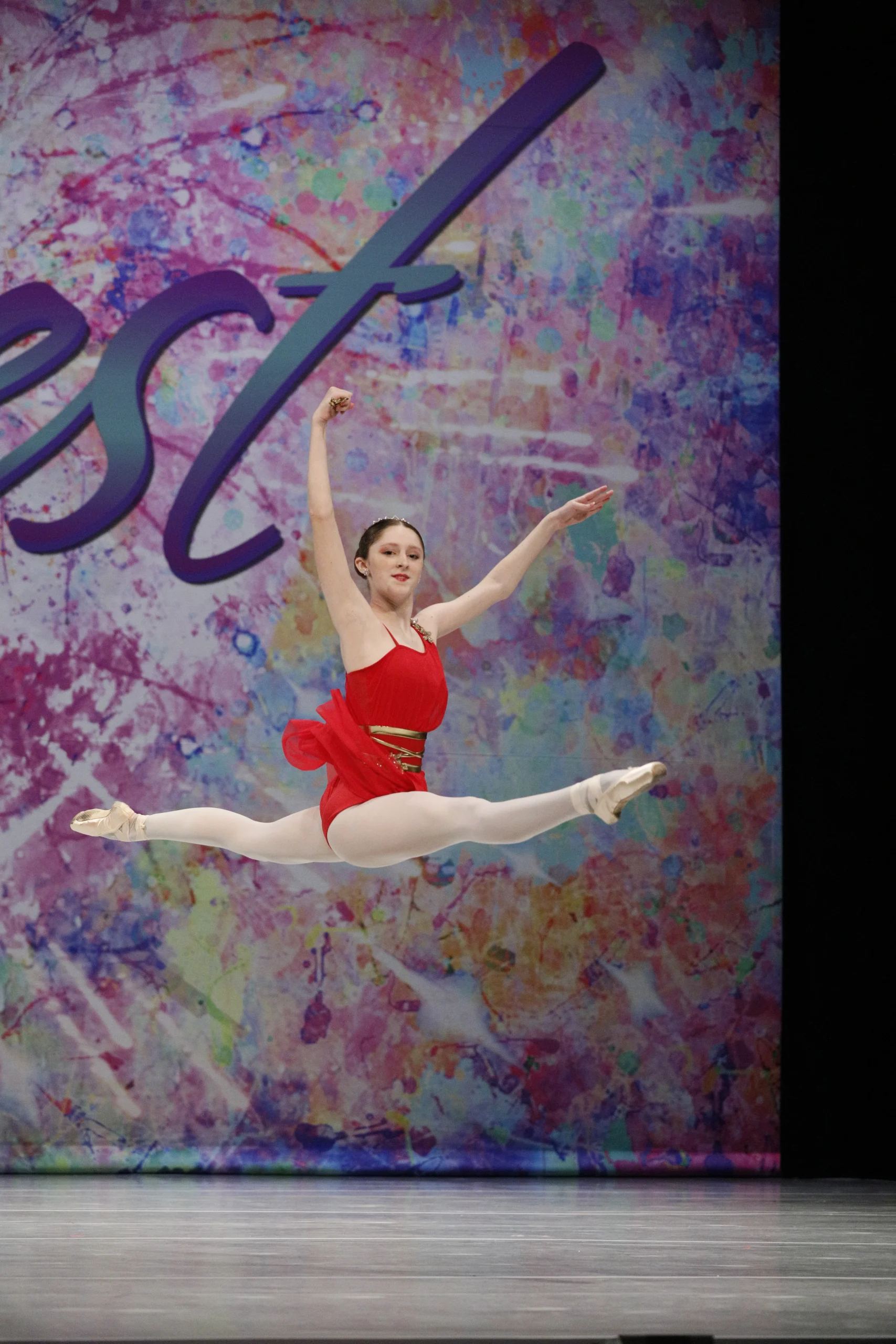
Competition gives dancers measurable goals, but healthy goals should include more than placement. A student might aim to keep focus through the full routine, improve a turn sequence, perform with stronger expression, or apply a correction that has been difficult in class.
Process goals keep the dancer’s attention on controllable actions. Scores and awards depend partly on the event, category, judging panel, and other entries. Preparation, effort, recovery, and response to feedback are more directly within the student’s control.
Competition results can produce pride, excitement, disappointment, or frustration. Children do not need to pretend that every outcome feels the same. With guidance, they can celebrate a strong result without becoming complacent or review a disappointing result without treating it as failure. Afterward, the dancer and teacher can recognize progress and choose one or two priorities for the next rehearsal.
What Kids’ Dance Competition Training Looks Like at Zabava
Zabava offers dance and supporting movement classes that can help students build a balanced training plan. The school’s dance program includes styles such as ballet, jazz, contemporary, modern, hip hop, and jazz-funk, along with training in stretching, acrobatics, spins and jumps, technique, and combinations. The right mix depends on the dancer’s age, experience, goals, and current skill level.
Competitive development usually requires greater consistency than a recreational schedule. Depending on the dancer’s needs, training may include a choreography class together with ballet, technique, flexibility, turns and jumps, or conditioning. More classes are not automatically better; the schedule should be sustainable and connected to specific goals.
Zabava typically participates in approximately two to six regional competitions per year. Competition is not required to study at the school. Families interested in competitive dance can ask the Zabava team about readiness, placement, training expectations, and an appropriate class schedule.
Recreational or Competitive Dance: Which Path Fits?
Both paths can help children develop coordination, confidence, musicality, and enjoyment. The choice should reflect the dancer’s experience, goals, and readiness, as well as the family’s schedule.
| Consideration | Recreational dance | Competitive dance |
|---|---|---|
| Best suited for | Beginners, students exploring dance, or families seeking a regular weekly activity | Students who want more performance experience and a greater training challenge |
| Main focus | Building skills, coordination, confidence, and enjoyment | Choreography, technique, performance preparation, and competition goals |
| Commitment | Usually a more flexible weekly schedule | Consistent attendance, rehearsals, events, costumes, and possible travel |
| Readiness | No competition preparation required | Depends on technique, focus, attendance, emotional maturity, and performance readiness |
| Placement | Based primarily on age and class level | Evaluated by the Zabava teaching team |
Signs Your Child May Be Ready for Competition
Parents do not need to judge readiness alone. A teacher can evaluate technique, focus, learning speed, performance quality, and how the student works in a group. Still, several signs can help start the conversation:
- The child regularly expresses an interest in performing and understands that preparation comes before the stage.
- Attendance is consistent, and the student can follow class expectations.
- The dancer accepts corrections and makes a real effort to apply them.
- Choreography is remembered between classes with reasonable support.
- The child can make a mistake, regain focus, and continue with reasonable teacher support.
- The family can support rehearsals, event dates, costumes, travel, and the required training schedule.
Readiness does not mean perfection. It means the student has enough foundation to benefit from the challenge without being placed in a situation that is unnecessarily stressful or unsafe.
How Parents Can Support a Competitive Dancer
Before the event, help with practical needs: sleep, meals, arrival time, costume pieces, shoes, and required supplies. A calm routine reduces preventable stress. Let the teacher handle last-minute technical corrections so the child is not receiving conflicting directions.
After the performance, begin with a neutral, supportive question such as, “How did it feel on stage?” or “What part felt strongest?” Give the dancer room to describe the experience before reviewing the result.
Praise specific actions rather than only the score or placement. Mention examples such as staying focused, supporting teammates, recovering after a mistake, or applying a correction. When feedback arrives, help the child identify one or two priorities rather than trying to fix everything at once.
Why Stage Experience Matters Outside Dance
Performance experience may also help children approach classroom presentations, auditions, interviews, team projects, and public speaking. A dancer may still feel nervous in a different setting, but competition provides a useful reference point: preparation helps, nerves can be managed, and one mistake does not require giving up.
Competition events also teach practical responsibility. Dancers follow schedules, respect backstage rules, wait for their turn, congratulate other performers, and represent their studio through their behavior.
Frequently Asked Questions About Dance Competitions for Kids
Is Competition Required at Zabava?
No. Competition is optional. Students may take recreational dance classes without joining a competitive routine.
How Many Competitions Does Zabava Attend?
Zabava participates in approximately two to six regional competitions per year. The exact schedule may vary by season and student placement.
Can a Beginner Join Competitive Dance Classes?
Some beginners may need recreational and technique classes before joining a competition routine. Readiness depends on factors such as age, focus, movement foundation, attendance, learning speed, and the routine’s requirements.
Will Competition Make a Shy Child More Confident?
Competition may support confidence when a child is prepared, placed appropriately, and guided without excessive pressure. Shy students can develop strong stage presence because performance skills are learned through practice and repetition.
What Should Parents Ask Before Choosing a Competitive Program?
Ask about weekly training, attendance requirements, rehearsal dates, competition fees, costumes, travel, teacher expectations, and student placement. Families should understand the full commitment before accepting a competition routine.
Ask Zabava About Recreational and Competitive Dance Classes in Boca Raton
Dance competitions can help prepared young dancers develop confidence, discipline, stage presence, teamwork, coachability, and resilience. However, competition is not the right path for every child, and readiness should be evaluated individually.
Explore Zabava’s dance classes in Boca Raton and review the current class schedule. Families can then register online or contact Zabava for placement guidance. The Zabava team can help you compare recreational classes with competitive dance development and choose a sustainable level of commitment for your child.

